

The Legacy Lives Here In Auburn
Black-owned businesses keep Harriet Tubman’s example alive through art, food, leadership and community.
Noah Howard, Tour Cayuga PR Manager
When Harriet Tubman settled in Auburn in 1859, she arrived with little more than determination and a plan for a quieter life. Peace, however, never meant idleness.
On a small piece of land along South Street she planted vegetables, raised chickens and sold produce. Over the years she saved enough to buy additional property and eventually built a refuge for people who had nowhere else to turn.

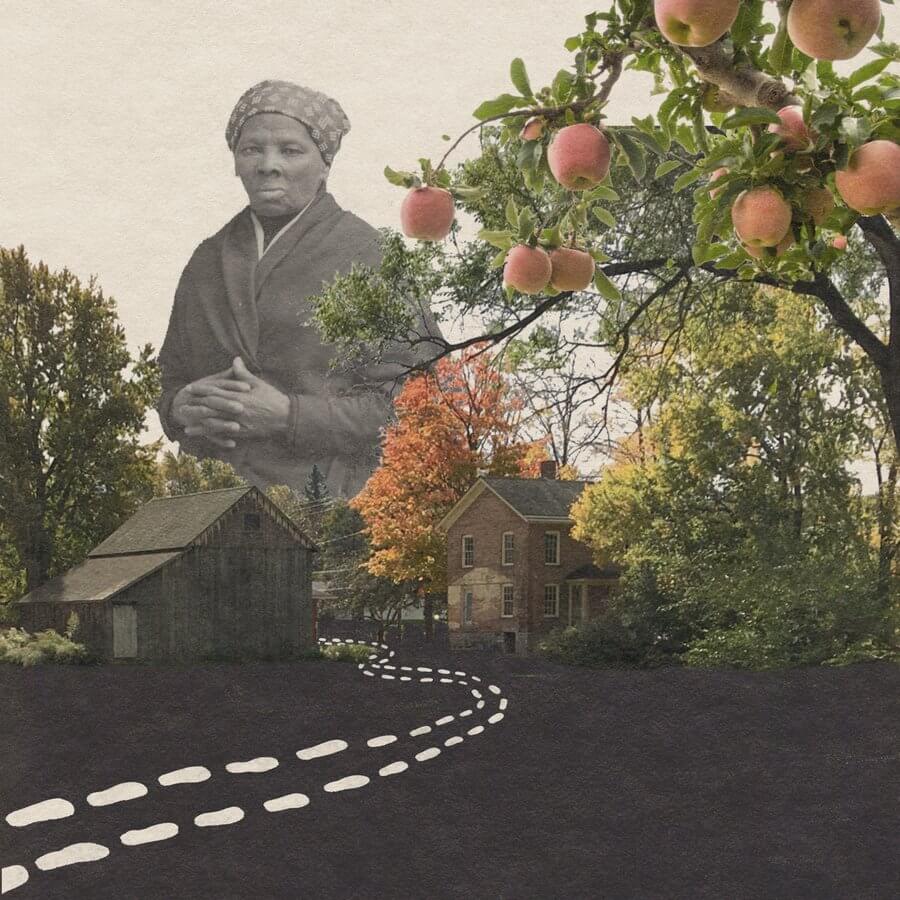

Tubman is remembered first as a liberator. Yet her life in Auburn also showed another side of her character: she was an organizer, entrepreneur, and someone who knew how to build from the ground up. That same quality continues to shape Auburn.
August is National Black Business Month, a moment to recognize and support Black-owned businesses across the country. In Cayuga County this recognition has a particular meaning. The same resourcefulness that guided Tubman is visible today in local storefronts, creative studios, and co-working spaces that give the city its energy.
You can see it in the leadership coaching sessions at Gwen, Inc., in the bold murals painted by Arthur “the Artist” Hutchinson, and in the flavors coming from Lavish Lounge, the city’s only Black-owned restaurant. It is there in Melody’s Co-Working Space downtown, where freelancers and small businesses find a place to work and connect. These businesses, each in their own way, create opportunities, spark conversations, and add to the city’s character. Each one extends a tradition that began when Tubman turned her own hard work into a lasting contribution.
Leadership rooted in legacy
Gwen Webber McLeod, president and CEO of the leadership firm Gwen, Inc., has built a national career in organizational consulting and executive coaching, helping leaders embrace confidence, competence, courage, and calm. In 2024, Mayor Jimmy Giannetino appointed her Chair of the Auburn Industrial Development Authority, the first Black woman to hold the role. Her concept of ‘Going First’ reflects Tubman’s example.

“Harriet Tubman was a Black woman who experienced
many ‘firsts’ in her lifetime. Her courage to do so informs decisions
I make as an executive Black woman leader,” Webber‑McLeod said.
“Her life is an example for all of us.” For Webber‑McLeod, Tubman’s determination to be a self-defined woman leader and entrepreneur reflects
what Gwen sees in Auburn’s emerging entrepreneurs today.
Art that connects a city
Arthur Hutchinson, known as “Arthur the Artist,” returned to Auburn after a career in architecture to fill the city with public art, including the large Harriet Tubman mural downtown.
“I think of art as a tool we can use to teach people
what’s valuable and to also help other people feel seen,”
Hutchinson said. “It makes them feel proud of the
place where they’re from. It makes them feel like
they belong in that place.”
Through his murals, Hutchinson says he wants Auburn residents to see themselves in their city and feel a stronger connection to its history.
Culture on the menu
On the west side of town is Lavish Lounge, co-owned by Andrew Kirkland and chef Marcia Myers. It stands out as the city’s only Black-owned restaurant and as one of the few places where you can find authentic Jamaican cuisine.

Kirkland shares how culture shapes every dish. “It’s very cultural. We try to emphasize that in our food. The different spices and flavors. Even in the tropical drinks we make.”
He adds an open invitation, “We would implore anyone who is interested in trying something different to come here and check us out.”
For Kirkland and Myers, Lavish Lounge is more than a place to eat. It’s a destination where Jamaican heritage comes alive through food, hospitality and a vibrant setting that supports community gathering and cultural pride.
Why it matters
National Black Business Month was created in 2004 to draw attention to the role of Black entrepreneurs in local economies. In Auburn it serves as a reminder that the city’s history was shaped by someone who refused to be limited by her circumstances.
Supporting these businesses is more than a financial choice. It is a way to carry forward that tradition of resilience.
For readers who want to explore more, Tour Cayuga has compiled a guide to the many Black-owned businesses in Auburn and Cayuga County. It includes restaurants, creative studios, and professional services that carry on this tradition of enterprise.
Looking ahead
A walk through Auburn this month will show how these businesses continue to contribute to the city. Talk to the people who run them, and you will hear a familiar mix of determination and hope. The qualities that allowed Tubman to build something meaningful here are the same qualities that drive a new generation to do the same.
For many, Auburn is more than a place to live.
It is a place to build, to create, and to leave something that lasts.
*Article first appeared in the Citizen Newspaper